• A persona poem is writing from the point of view of another person or thing. There are some excellent verse novels that use this technique. One is “The Watch that Ends the Night” by Allan Wolf. This is a view of the Titanic from the point of view of individuals, but also from parts of the ship and the iceberg itself. Another great verse novel that uses persona poems wonderfully is “October Mourning: A Song for Matthew Shepard” by Leslea Newman. Her persona poem from the fence that Matthew was tied to as he was dying is heartbreaking.

    I thought that instead of looking around and writing from the point of view of my tea cup, or a bird outside my window, I would try taking in history, like these verse novels, and reflect on that from an outsiders point of view. I decided to write about the Tufts University student who was abducted by ICE in Massachusetts recently. This is from the view of a nearby pigeon.

    This is an adapted Roundel form, which has the rhyming lines of abaB bab abaB bab abaB. The B lines must repeat the first part of the first line in the poem.

    IN SEARCH OF

    Do you think that woman might have extra food

    for a pigeon with a perky disposition? 

    Perhaps she’d stop and feed me if I cooed

    Do you think?

    A man walks up and takes a stern position

    Another grabs her hands, so rough and crude

    Then ties them tight, despite her dire petitions

    to stop. Her world is skewed

    as they stuff her in a van without admission

    of anything she may have misconstrued.

    Do you think?

    They leave her with no power, no volition.

    Her shouts are simply whimpers, now subdued.

    With only signs of fear and not contrition

    All signs of her abduction now removed.

    I look about for food in desperation.

    There must be someone else I can pursue.

    Do you think?
  • The best thing about poetry is discovering as you are writing, what you are really thinking about. Today’s prompt was to write a response poem. So many things you can respond to. I thought of weather, Spring, allergies, the news…but when I finally sat down to write, I remembered how surprised I was to have the main character of my favorite TV show die. Although I started writing about that, I soon discovered that the emotions I felt for my TV show, were also being felt in my response to Trump’s policies as well.

    HOW COULD THEY?

    They killed off
    the main character!
    Though I know eight seasons
    can be a long time,
    for me
    it was sudden death.
    No warning.
    My mouth opened wide
    in disbelief
    like the ones
    who mourned
    so exquisitely
    on the screen.
    My mind replayed
    each episode,
    questioning interactions,
    looking for codes
    that might infer
    this direction
    was unfolding.
    But no.
    As I walked away
    I remembered
    that emotional manipulation
    works as well
    in politics
    as it did
    in TV.

  • Summer in the city is about being anywhere else. Sometimes it gets a little lonely when everyone is everywhere but home. This tiny snapshot reminds one of how quiet city life can be.

    City Solitude

    I kick a crumpled can
    across the hot tar
    that stretches
    between row houses on Riverside Ave.
    The can dances,
    bouncing like a pebble
    across an empty pond.
    But no one
    notices.
    A car rolls by
    It’s radio booms so loud
    That my skin
    ripples
    right down
    to my toes.
    But then
    it is gone.
    Summer in the city
    when nobody’s
    home.

  • The word of the day is fantastic. And what could be more fantastic than Spring breaking through the muck and mire of construction to celebrate new life. In our yard, these tiny daffodils break through the mud, a remembrance of years past when our nephew had created a small circular garden in the back yard. The stones that once bordered the garden are long gone, as are all the other flowers that once graced that circle. But the daffodils still push through, reliving their glory as the garden’s centerpiece.

    FANTASTIC

    In the middle of the yard
    erupting through dirt and debris
    of construction
    daffodils sprout.
    Imploring arms
    praise the sun
    while saffron heads
    bend in prayer
    remembering
    past lives
    in the burnt sienna soil.

  • Having boundaries will often make a poem come easier. And in teaching, giving kids boundaries will make their ideas easier to narrow down as well. I found that with my own art teaching. To tell kids, draw whatever you want, will often get doodles or uncertainty, distracted talking or frustrated scribbles. But to ask kids to draw a time when they (or a character) were really scared will get you anything from monsters under the bed to waiting on a rainy day for a parent to pick you up after school. Boundaries that let you think emotionally focus in ideas full of intensity, and are more fun to work on.

    Today, our prompt had no boundaries, just the prompt of using a form, or an un-form. And I found it impossible to focus in on, even though most of my poems this month fall into specific forms. So I used a mimic poem to take in for a moment one of my favorite poems, and to play without worrying about the outcome.

    A mimic poem creates a new poem that imitates the style, tone, and structure of a pre-existing poem. This is based on William Carlos William’s poem, This is just to say.

    THIS IS JUST TO SAY

    I have written
    a new poem
    called a
    mimic

    to which
    some
    would turn up
    their noses
    and sniff

    forgive me
    inspiration
    doesn’t ask
    their
    approval

  • Losing or lost could be like losing a game or a family pet or socks . However, a person could also lose some weight, bad habits, and/or negativity. For me, lost meant my mother-in-law’s teeth, which we’ve been searching for, well, it seems like forever… Until last night, and last minute, we found them.

    LOST IN DEMENTIA

    My mother-in-law lost her teeth.
    For two weeks we searched
    opening drawers
    unfolding shirts and pajamas,
    unrolling socks.
    She always protects them
    with something soft
    so they won’t break.
    Six of us scoured her home
    derailing her privacy
    her personal zones
    until in the end,
    we called the dentist
    to start again.
    Then we found them.
    Wrapped in a napkin
    in the back of the silverware drawer
    safe and secure.
    And I wonder
    if the forks and knives
    like soldiers
    were meant to keep them safe
    or did she mean
    to store them
    in a place
    she wouldn’t
    forget.
    .

  • Full of it, half full, full moon, full of holes, full of life, full on crazy… There are so many options here. But what kept coming to me, was FULL STOP. Sometimes you just can’t ignore the muse. Even if you didn’t want to write about politics, again.

    I chose to write a triolet. The form looks like this.

    A (first line)
    B (second line)
    a (rhymes with first line)
    A (repeat first line)
    a (rhymes with first line)
    b (rhymes with second line)
    A (repeat first line)
    B (repeat second line)

    Triolet: FULL STOP

    You’ve crossed the line.

    Full stop.

    No longer moral or kind,

    you’ve crossed the line.

    Deportation for speaking one’s mind is not fine.

    Oligarchy will flop.

    Full stop.

    You’ve crossed the line.

  • When I was little, risks meant going somewhere high and looking down, or doing something that scared me, like riding on a rollercoaster. Later on, risks were more about money and jobs and relationships. I’ve lived through the large risks, and I know I can handle them. But as we get older, it seems that the smaller risks become more important. I contemplate these in my draft poem today, and wonder what my future risks will be. I hope I can continue to risk doing the things I love. I hope I dance.

    • Risks are different
      when you reach a certain age
      more like challenges
      of the everyday.
      Should I walk across
      the parking lot
      when handicapped
      is full?
      Should I attend
      the quilt show
      when my balance is
      unsure?
      Should I step out
      in the weather
      when the snow is
      just an inch?
      Can I adapt a recipe
      when cooking
      in a pinch?
      The bigger risks
      are easy now
      we’ve taken
      all the chances.
      But now the risk
      is remembering
      to save out time
      for dances.
  • The prompt of the day is to write a poem using numbers. I have my DONUT poem, posted earlier on this blog, but I wanted to do something different. I find the motivation for writing poems interesting. Either I am searching for something in my recent life that I can draw on, or gain inspiration from something I see around me. In this case, we went to the broker and talked about stocks and the future of our retirement money under Trump. And so, that became my numbers to draw on…

    TARRIFS, STOCKS and RETIREMENT

    one global tariff
    two hours talking math
    three conspiring adults
    concerned over market strategies
    for the future
    two thousand and twenty five
    has been quite a surprise.

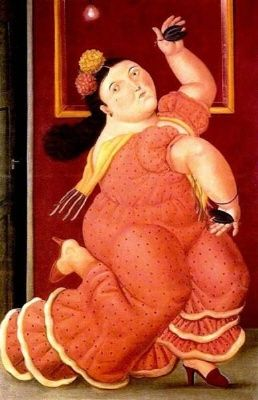
  • Ekphrastic poetry is used to draw attention to a work of art—usually visual art, but it could be something like a song or a work of fiction, sculptures, dance, or even theatrical performances.

    My work of art to celebrate is that of Botero, a Colombian artist of great fame who loves to paint voluptuous people. He is not overweight, and his wives have all been thin. Instead he is drawn to the volume and sensuality of form, and parody when making his art. Check out his Mona Lisa parody...

    Thumbnail

    BOTERO

    It’s not fat people
    so you say
    you love the 3D form
    it is indeed expressive
    sensual and warm.
    The volume speaks of freedom
    that women rarely gain
    a plus size girl is often left
    alone and in disdain.
    You give us larger women
    celebration to be free
    and so I dance this dance for you,
    Botero, you and me.

Design a site like this with WordPress.com
Get started